
4 Exercises for Writing Unique and Creative Lyrics
Many songwriters find themselves in a rut when it comes to lyric writing. Often, the issue is that the lyrics they write don’t match up with the lyrics they admire. This might be because they perceive their lyrics as boring, overly literal or too stale. To help combat this issue, we’ll be going through 4 different exercises that we think can help you develop creative lyrics.
This article is a summarised transcript of our video “4 Methods for Writing Out-of-the-Box Lyrics”. Click here to watch the video for more details, explanations and examples.
Exercise #1 – Word Ladders
This exercise – taken from Jeff Tweedy’s book “How to Write One Song” – is a fun and creative way to generate unique combinations of words. The exercise involves the following 4 steps:
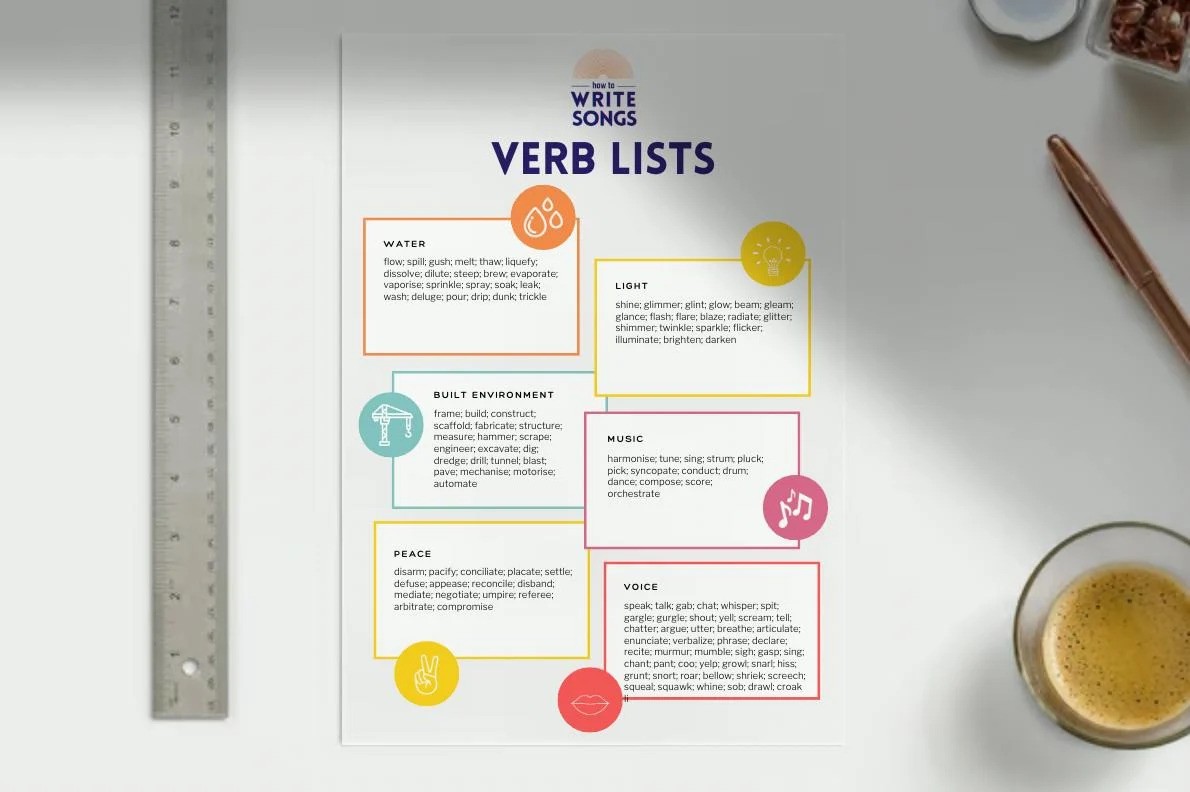
- Create 2 lists of 10 words each. One list should consist of verbs and the other should consist of nouns. The two lists should be based on topics unrelated to each other. For example, your list of verbs could all be related to surgery, while your list of nouns is of objects around you.
Download our free Verb List PDF for 6 categorised verb lists to help you get started:
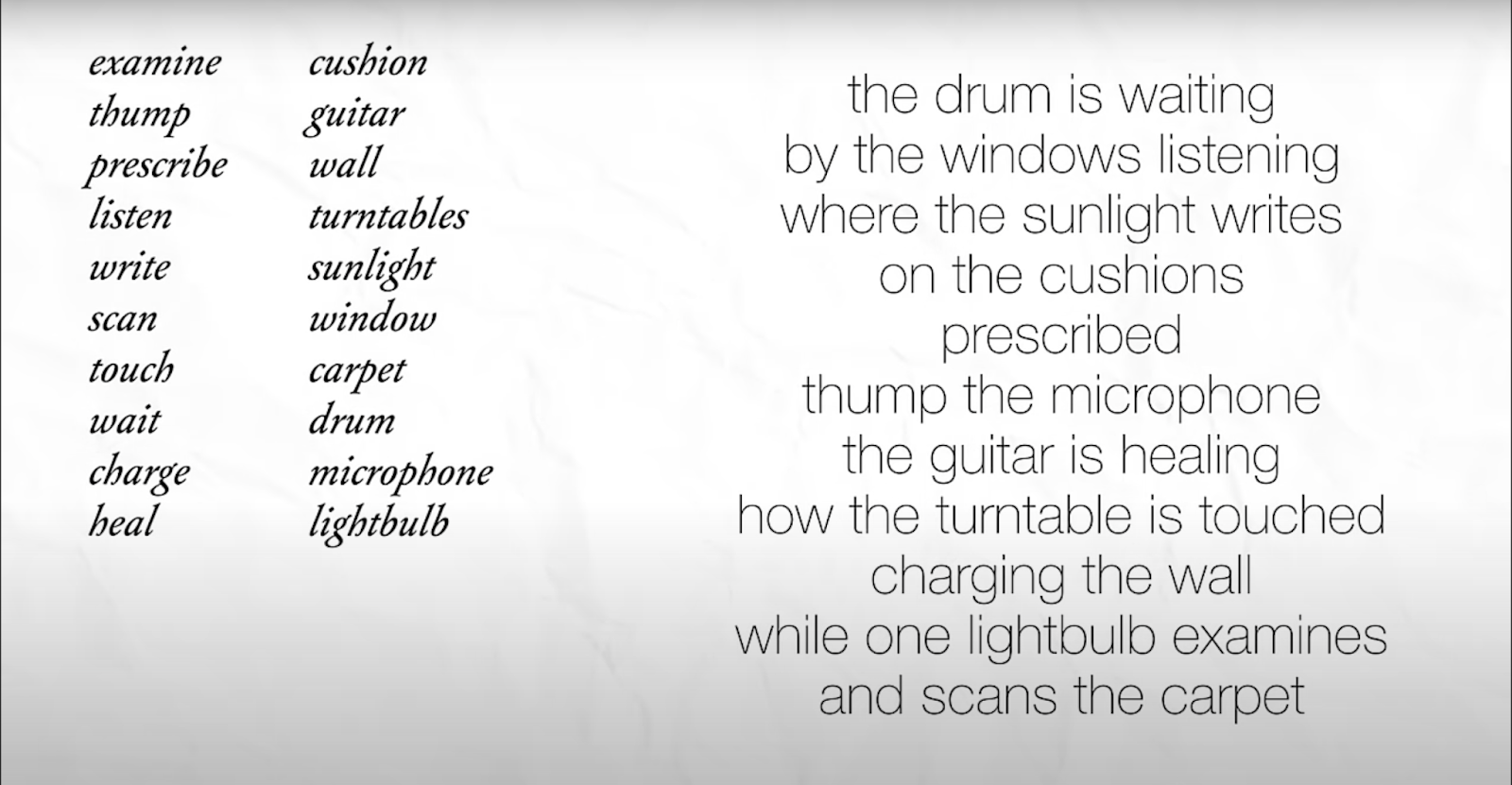
- Draw lines connecting the words. The lines can be random and connected whichever way, as long as all 10 words are matched up.
- Create a short poem with lines that connect the words in your lists. For this step, focus on having fun rather than creating lyrics. Below is an example of what that would look like:
- Turn your word poem into lyrics. Here is what Jeff Tweedy has written:
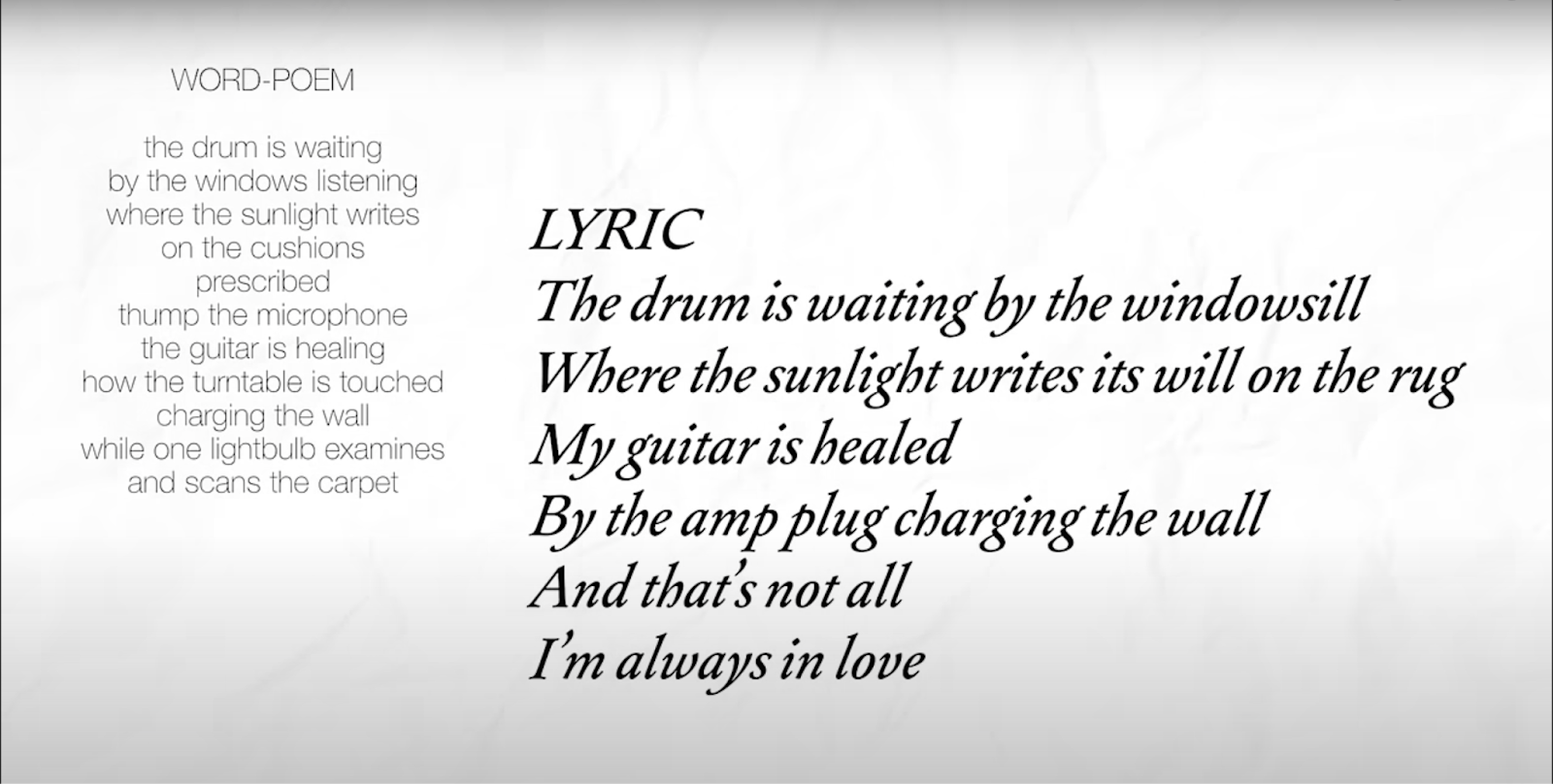
Here are some tips on what you should consider when writing your lyrics:
- Include the deliberate use of end-line and internal rhymes. Notice how the word ‘windowsill’ rhymes with ‘will’, and ‘wall’ rhymes with ’all’.
- End with an emotional statement (something personal). He started by describing a scene, but then ended with providing more personal emotional information.
- Add grammatical flow and connection. The goal is to try and make it sound more like natural speech, instead of a random word jumble.
Exercise #2 – Rhyme Pairs
Rhyme Pairs involves the following steps:
- Come up with 5 pairs of interesting word rhymes. It’s better if the rhymes are slant rhymes instead of perfect rhymes. Slant rhyme refers to words that almost rhyme. For example, “Motion/ Ocean” is a perfect rhyme whilst “Open/ Ocean” is a slant rhyme.
You can do this by randomly picking words from a dictionary, or using a random word generator such as B-Rhymes or Perchance. - Set a 10 minute timer and write 5 couplets in under 10 minutes. You don’t have to use the entire 10 minutes. The timer is just there to ensure that you don’t spend more than 10 minutes on this step. Here’s an example of what that would look like:
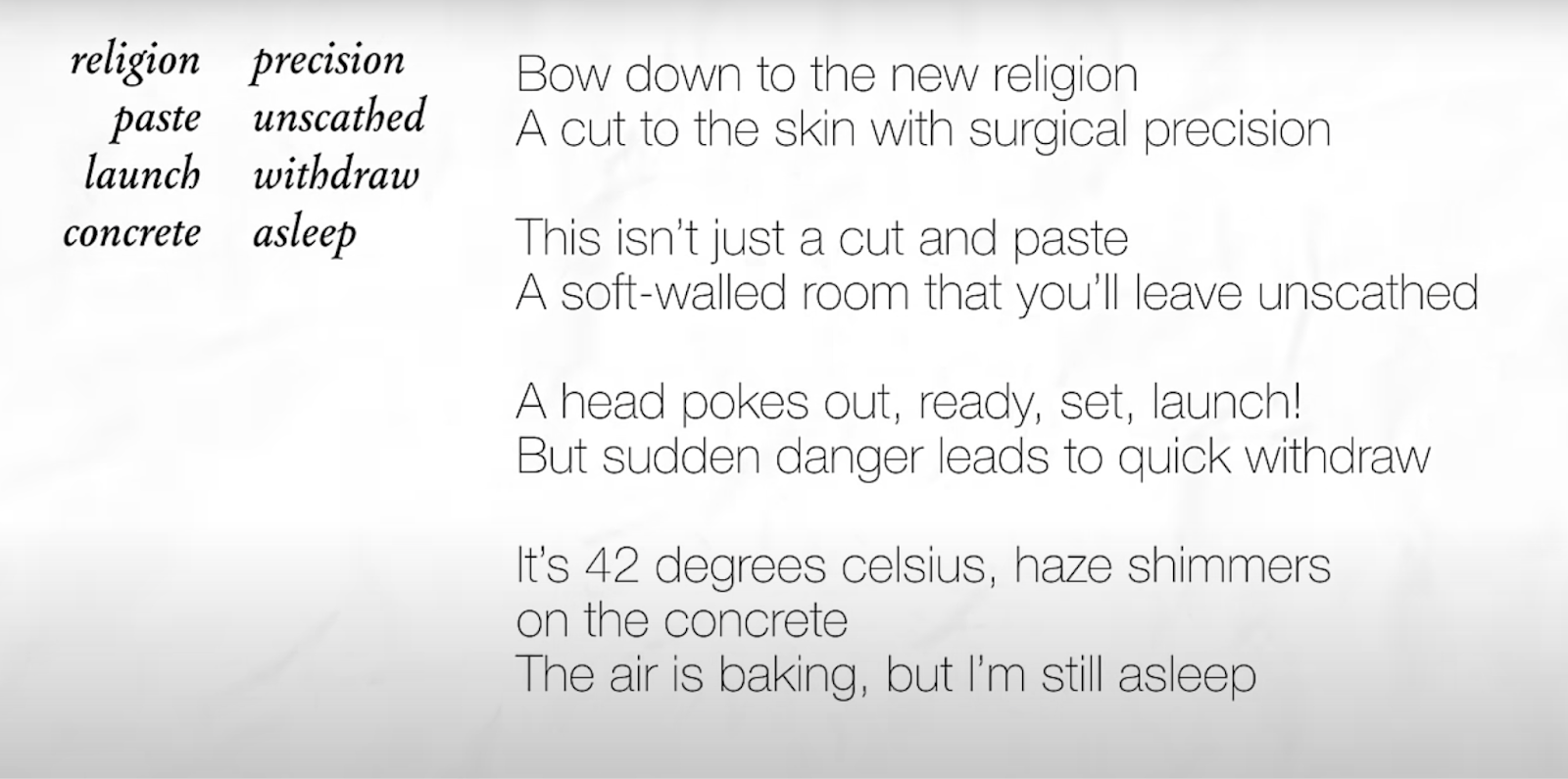
The important thing to note is that this exercise isn’t meant to help you write entire sections of lyrics. Instead, it’s meant to help inspire new and interesting ideas.
Exercise #3 – Rhyme Scheme
Unlike the previous exercise, Rhyme Scheme isn’t about imperfect or perfect rhymes. Rather, it’s about the ordering of your rhymes.
If you’d like to learn more about Rhyme Scheme, check out this YouTube video here. In addition, you can also get a really comprehensive and detailed guide on Rhyme Schemes plus other great songwriting exercises in our Udemy course here.
For this exercise, we’re going to focus on breaking stereotypical rhyme schemes. For example, here is a section made of rhyming couplets that can be described as AABB:
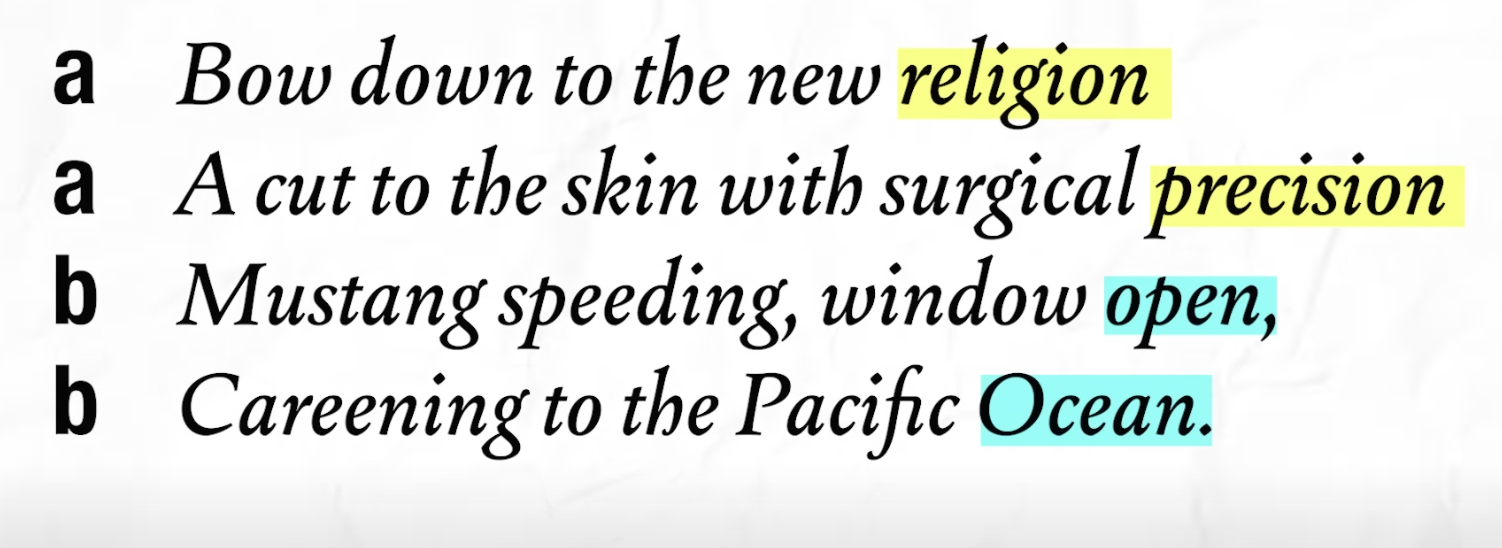
If we take these rhyme pairs and instead arrange them into an ABAB format, we would get a section like this:
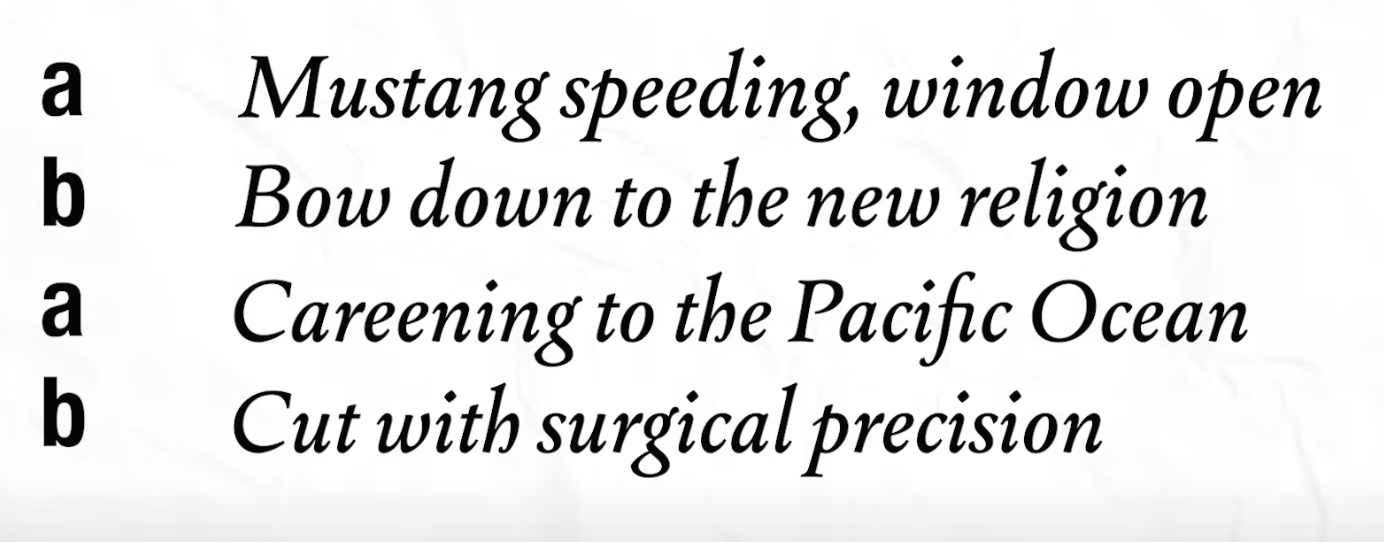
Even though it’s just a slight change, we can see how this sort of non-linear way of thinking can create an unexpected flow of ideas.
Exercise #4 – The Cut-Up Method
The cut-up method was beloved by artist David Bowie, who learnt it from writer William Burroughs. He used to take physical texts – such as books, newspapers or magazines – and cut out words, sentences or phrases. Then, he mixed up the fragments he had cut-up, picked a few, and randomly reordered them to see what he would get.
You can do this digitally by using an online website called Language is a Virus, which has a cut-up machine that will do it for you.
Often, the results from this exercise will sound like a jumble of gibberish. However, that gibberish might be just what you needed to help spark new ideas.
Conclusion: 4 Exercises for Writing Unique and Creative Lyrics
These four methods provide songwriters with innovative ways to break free from conventional lyric writing. By experimenting with language in these ways, you not only revitalise your writing process but also open doors to new and exciting lyrical possibilities.
If you would like more details, explanations and examples, then be sure to check out the video now.
Level up your songwriting with five radically practical exercises used by professional songwriters around the world:


